Are Daytime Running Lights Worth It for Cyclists? The Evidence and the Trade-offs
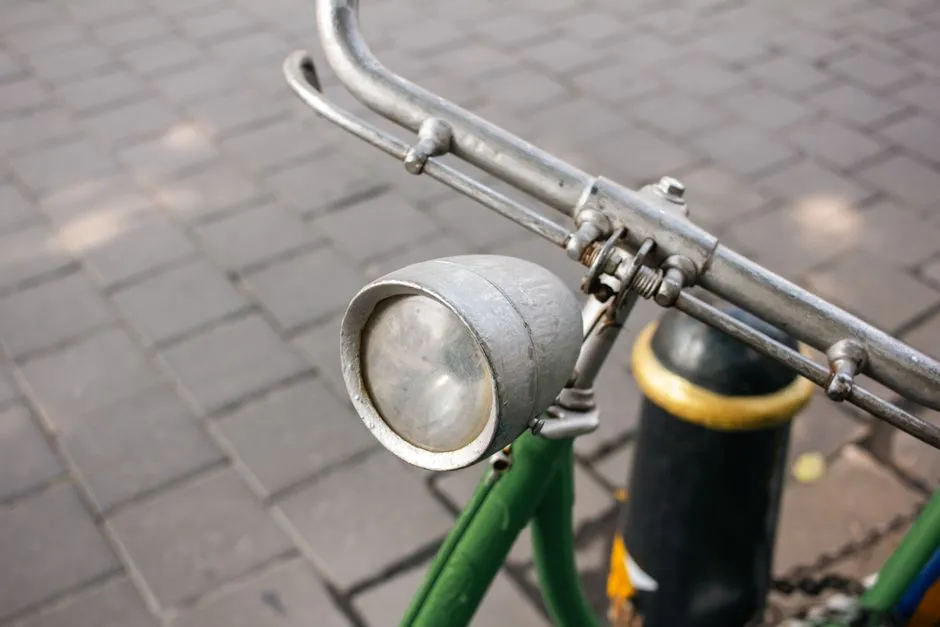
The Short Answer: Yes — For Most Riders, It's the Cheapest Safety Upgrade Left
If you ride anywhere near cars, daytime running lights are worth it. That's the verdict, and it's not a close call. A rear daytime flash is the single highest-value addition for road and commuter cyclists who already have a night setup, and a front daytime flash is a strong second. Solid daytime-capable lights typically run $30–$60 each, prices vary by retailer, and the category has matured to the point where battery life is no longer the compromise it was five years ago.
Here's the quick version before we get into the evidence:
- Best value move: a rear light with a dedicated daytime flash mode, mounted at seatpost height. Rear-approach collisions are the scenario riders fear most, and this is the direct countermeasure.
- Best full setup: front and rear daytime flash together. Drivers pulling out of side streets and turning across your path see the front light; overtaking traffic sees the rear.
- Skip it only if: you ride exclusively on car-free paths or trails — and even then, a rear flash costs little and weighs less than a spare tube.
If you're starting from zero, our roundup of the best bike lights for commuting covers specific front and rear sets; this guide is about whether the daytime habit itself earns its battery drain.
Why Daylight Is the Problem, Not Just Darkness
The intuition that lights are for night riding misses where collisions actually happen. Most car-bike crashes occur in daylight — for the simple reason that most riding happens in daylight. The dominant failure mode isn't a driver who couldn't see in the dark; it's a driver who looked and didn't register you. Traffic engineers call these "looked but failed to see" errors, and cyclists are their most frequent victims: a rider is a narrow, slow-moving shape against visually busy backgrounds of parked cars, storefronts, and shadow.
Daytime running lights attack exactly this problem. The car industry reached the same conclusion decades ago — daytime running lights have been standard on new cars across much of Europe for years — and the logic transfers directly to bikes, arguably with more force, because a cyclist has far less visual mass than a car to begin with.
What the evidence actually says
The best-known data point is a large Danish study from the early 2010s that followed several thousand cyclists, roughly half of whom were given permanently mounted running lights. Riders using always-on lights recorded a meaningfully lower rate of multi-party daytime incidents — the widely cited figure is around a 19% reduction in crashes involving another road user. One study isn't a law of physics, and self-selection effects are hard to fully rule out in this kind of research, but the direction of the finding matches what conspicuity research has shown for motorcycles and cars for decades: things that flash and contrast get detected earlier.
Be honest with yourself about what that means. A daytime light improves the odds that a driver detects you a second or two sooner. It does not make you visible to a driver looking at a phone, and it is not a substitute for road position, an intact braking system, or a certified helmet. It shifts probability. In traffic, shifted probability is exactly what you're shopping for.
What Makes a Light Actually Work in Daylight
Sunlight is a brutal competitor. A light that looks impressive in your garage can vanish completely at noon. When we evaluate daytime-capable lights, four things matter, in this order:
1. A dedicated daytime flash mode
Steady modes that work at night are largely wasted in sun. Daytime visibility comes from interruption — an irregular or high-contrast flash pattern that triggers the motion-detection part of a driver's vision. Brands like Bontrager (which popularized the "daytime running light" framing for bikes), Cygolite, Lezyne, and Garmin all now ship modes designed specifically for daylight: brighter pulses, harder on-off contrast, longer claimed detection distances. If a light's spec sheet doesn't mention a daytime mode, assume it wasn't designed for this job.
2. Enough output, in the right form
Raw lumens matter more in daylight than at night. As a working rule of thumb, rear lights intended for daytime use generally sit in the 65–300 lumen range in flash mode, and daytime front flashers typically run a few hundred lumens — far less than you'd want for lighting a dark road, but delivered in sharp pulses. Beam focus counts too: a rear light with a tight, hot center point punches through sun glare better than a diffuse glow of the same rating. For the full breakdown of output by scenario, see how many lumens you actually need.
3. Battery life at full daytime output
This is where cheap lights quietly fail. Daytime modes are power-hungry, and a light that dies 40 minutes into a commute protects no one. Look for claimed daytime-flash runtimes that comfortably exceed your longest regular ride, then mentally discount the claim by a margin — real-world runtimes shrink in cold weather and as batteries age.
4. Mounting that survives daily use
A light aimed at the sky helps nobody. Rear lights belong on the seatpost or seat stay, aimed level; front lights on the bars or fork, level or fractionally down. If you carry a saddlebag or wear a jacket that droops over the seatpost, check that it doesn't curtain your rear light — it's the most common self-inflicted visibility failure we see.
Setup Options Compared
| Setup | Typical cost range | Daytime benefit | Best for | Worth knowing |
|---|---|---|---|---|
| Rear daytime flash only | $30–$60 | Strong — covers overtaking traffic | Riders adding daytime visibility on a budget | Does nothing for junctions and side-street pull-outs ahead of you |
| Front + rear daytime flash | $60–$120 | Strongest — covers both approach directions | Commuters and road riders in regular traffic | Two batteries to keep charged; a dead light is an invisible light |
| Radar taillight (e.g. Garmin Varia line) | Roughly $150–$200 | Strong, plus rear-approach alerts to your head unit or phone | Riders on fast open roads | Priciest option; radar alerts are a bonus, not a daytime-visibility requirement |
| Reflectors and hi-vis only | $0–$25 | Weak in daylight | Nobody as a complete solution | Reflectors need a light source aimed at them — they do almost nothing at noon |
Prices are editorial ranges and vary by retailer and model year.
The Honest Trade-offs
We'd be doing you a disservice pretending this is free of downsides. Three come up repeatedly:
- Charging discipline. Daytime flash modes drain batteries faster than night modes on many lights. Running lights every ride means charging becomes routine maintenance, like tire pressure. USB-C charging and clear battery indicators are worth prioritizing for exactly this reason.
- Flash etiquette. A high-output daytime flash is engineered to be hard to ignore — which makes it genuinely obnoxious on shared paths and in group rides. The fix is simple: run flash in traffic, switch to a low steady or off when you're around other riders and pedestrians at close range.
- Cost creep. Lights fail, get stolen, and get left on bikes at racks. Budget for the light you'll actually keep mounted and charged, not the flagship you'll baby. A mid-range light used daily beats a premium light left in a drawer.
One more caution, because the marketing around this category can get breathless: claimed visibility distances ("visible from over a kilometer") describe ideal detection conditions, not a guarantee that a driver will look, register, and react. Treat those numbers as directional, not as a safety promise.
Bottom Line
Daytime running lights are one of the rare cycling purchases where the evidence, the cost, and the everyday convenience all point the same direction. For the price of a decent pair of tires you can meaningfully improve the chance that drivers detect you in the scenario where most crashes actually happen — broad daylight. Start with a rear daytime flash, add a front unit if you ride in traffic regularly, and build the charging habit alongside it.
If you're ready to pick actual models, our commuter bike lights roundup narrows the field, and the rest of our lights and visibility guides cover lumens, beam patterns, and mounting in more depth. Whatever you buy, the light that works is the one that's charged, aimed level, and switched on every single ride — day included.